like Facebook follow Twitter watch YouTube subscribe RSS Feed

PRESS RELEASE! Los Angeles swarms City Hall in support of urban beekeeping!

Click here to view full press release and photo
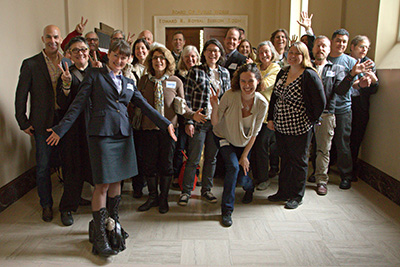
Beekeeping_May14_2015web
Photo by Karim Sahli 

LA Planning Commission unanimously approves backyard beekeeping ordinance today.

After years of public outreach and grassroots efforts[1] at the local community councils led by beekeepers across Los Angeles, the Department of City Planning, Policy Division[2] presented its recommendations for backyard beekeeping to the LA Planning Commission today and received unanimous support.

In addition to the swarm of local beekeeping supporters who all spoke in favor of legalizing backyard beekeeping, Councilmember Paul Koretz (CD-5), Clare Eberle, planning deputy for Councilmember José Huizar (CD-14), and former Culver City Mayor Meghan Sahli-Wells were also in attendance speaking in favor of the ordinance.

LA City Councilmember Paul Koretz surprised the Planning Commission by showing up to testify. “There is no one more nervous about bees than I am.  I stepped on a bee years ago, got stung, my leg swelled up and I had to walk with a cane for three weeks,” Koretz said. “There are currently 9 to 11 beehives per square mile in Los Angeles.  When this ordinance passes, there will remain 9 to 11 beehives per square mile, but we will have more beekeepers to know where they are and to manage those hives.  Which is a great idea in my book.”

“Bees are an essential part of our food system. According to the USDA, bees are responsible for the production of about a third of our diet. In addition, bees are a boon to local gardeners and urban farmers. As you may be aware, honeybees worldwide are in crisis, falling prey to the mysterious Colony Collapse Disorder at an alarming rate, making beekeeping a serious food security issue.” – Rob McFarland, Los Angeles Resident (Co-Founder of HoneyLove) 

NY Times just reported on May 13, 2015: “Since April 2014, beekeepers lost 42.1 percent of their colonies, the second highest loss rate in nine years, according to an annual survey conducted by a bee partnership that includes the U.S. Department of Agriculture.”[3]

“Hunger is a huge problem in our city. Currently, there are over 1.1 million citizens using the SNAP program for food assistance. Honeybees are such effective pollinators that they are able to increase agricultural yield by 30 to 60 percent. A 30 to 60 percent increase in productivity in an urban garden can mean the difference between a family needing food assistance and a family who can pull themselves out of poverty, and even participate in a local, green economy! Urban beekeeping is a powerful tool that we can use to help provide food security for our most vulnerable neighbors. Honeybees enable people of all economic levels to eat better and have the empowering and deeply satisfying experience of successfully growing their own food.” – Max Wong, Los Angeles Resident

Most cities have already legalized urban beekeeping including Santa Monica, Redondo Beach, Culver City, San Diego, San Francisco, New York, Seattle, Portland, Denver, Chicago, Toronto, Vancouver, Paris, London… the list goes on.

“It’s great to see Los Angeles catching up with all the other great cities of the world in making beekeeping legal. The City Planning department did a great job in crafting a common sense set of regulations. Once the City Council approves the changes to the code we can get on with the work of saving bees and creating a city friendly to pollinators.” – Erik Knutzen, Los Angeles Resident

“The most common concern about honey bees is bee stings. Honey bees are not aggressive by nature and are unlikely to sting. Only 0.4% of Americans report an allergy to insect stings in the U.S., and almost none of these are caused by honey bees. In addition, less than 1% of the US population is at risk of systemic reaction to stings by honey bees. Severe reactions from the sting of any one insect in a year are 1 in 5,555,556. The chance that someone will be hit by a car is 59.3% higher.”[4]

“There are so many environmental reasons to support urban beekeeping but there is also a really critical safety element. When beekeeping is legal, then feral hives can be properly managed which makes our city safer.” Meghan Sahli-Wells, Current Councilmember and former Mayor of Culver City 

“I am one of the minuscule percentage of people who is actually systemically allergic to honey bees and I am full support of legalizing urban beekeeping in Los Angeles. Beekeepers are our first line of defense in helping to make the city safer by managing the feral populations of bees that already live naturally in our environment. I am very happy to see this ordinance move forward!” – Chelsea McFarland, Los Angeles Resident

“I am a registered urban beekeeper with two boys 4 and 8 years old who have NEVER been stung by any honey bees from our two managed hives in our backyard.  Unlike the 9 to 11 unmanaged feral hives already existing per square mile in Los Angeles[5], my hives are managed and carefully looked after. Having more educated beekeepers will in fact provide a safer environment for everyone.” – Paul Hekimian, Santa Monica Resident


[1] http://honeylove.org/press/

[2] Planning Department: Spearheaded by Katherine Peterson and supervisors Tom Rothmann and Erick Lopez, and Student Professional Worker, Jaime Espinoza.

[3] http://www.nytimes.com/aponline/2015/05/13/science/ap-us-sci-bee-deaths.html?ref=aponline&_r=1

[4] http://justfood.org/sites/default/files/Just%20Food%20Beekeeping%20Campaign%20Fact%20Sheet.pdf

[5] 9-11 colonies of bees per square mile was a stat given by LA County Agricultural Commissioner during the Mar Vista Beekeeping Feasibility Study in 2011 – https://docs.google.com/file/d/0B3mjhYhHhzMrNGRiYjkzNjItMGExNi00Y2I1LWIyMWUtY2VhYTIwNzJkMTQ5/edit


About HoneyLove

HoneyLove is a Los Angeles based 501(c)3 non-profit conservation organization with a mission to protect the honeybees by educating our communities and inspiring new urban beekeepers. Founded in 2011, HoneyLove believes that the city is the last refuge of the honeybee. Our home gardens are generally free of pesticides, and in cities like Los Angeles, there is year-round availability of pollen and nectar for the honeybees!  Learn more about HoneyLove’s events and services at http://honeylove.org

Read full story · Posted in News

Thanks for the buzz! @smdailypress @sspitzSaMo

SMDP

Reality vs. fantasy (Culture Watch)
by Sarah Spitz

SAVING BEES

…Speaking of sustainability: there would be no food without bees.

Join local non-profit organization, HoneyLove (www.honeylove.org) for its 2015 Yellow Tie fundraiser. Wear yellow, pose for Yellow Carpet photos, and enjoy great food, fun drinks, local honey tasting and music by the Leftover Cuties, in support of HoneyLove’s mission to protect honeybees and inspire and educate new urban beekeepers! Go online to find your ticket.

It takes place on May 17 from 6 to 9 p.m. at The Cook’s Garden by HGEL at 1033 Abbot Kinney Blvd. in Venice. Children dressed as bees get in for free. Your ticket is here: YTE2015.eventbrite.com.

[Read full article on SM Daily Press]

YTE15_slide

Read full story · Posted in HoneyLove Buzz

Only a few days left to support beekeeping in Los Angeles!!

LEGALIZATION UPDATE!!

  • Last chance to submit PUBLIC COMMENTS April 17th, 2015!!
  • SAVE THE DATE: May 14th City Planning Commission (details coming soon)

Click here to view the proposed Backyard Beekeeping Powerpoint

For more information, please contact staff: Katie Peterson
KATHERINE.PETERSON@LACITY.ORG | 213-978-1445


STEP 1:

sign petition
http://www.change.org/petitions/legalize-urban-beekeeping-in-los-angeles-2

Legalize Urban Beekeeping

STEP 2: Email a letter of support to LA City Council!!

EMAIL:
katherine.peterson@lacity.org
councilmember.huizar@lacity.org
councilmember.cedillo@lacity.org
councilmember.englander@lacity.org
CC:
mike.bonin@lacity.org
councilmember.labonge@lacity.org
councilmember.ofarrell@lacity.org
martin.schlageter@lacity.org
mayor@lacity.org
info@honeylove.org

-SAMPLE EMAIL-

SUBJECT: Council File: 12-0785 Beekeeping / Single Family Residential (R1) Zones

I am writing to ask that you make the legalization of beekeeping and the establishment of a humane bee rescue policy one of your top priorities.

Bees are an essential part of our food system. According to the USDA, bees are responsible for the production of about a third of our diet. In addition, bees are a boon to local gardeners and urban farmers. As you may be aware, honeybees worldwide are in crisis, falling prey to the mysterious Colony Collapse Disorder at an alarming rate, making beekeeping a serious food security issue.

Urban beekeeping has been gaining widespread attention especially since the President and First Lady of the United States began keeping two hives on the White House lawn and San Francisco, New York, Seattle, Portland, Denver, Chicago and most recently Santa Monica and Redondo Beach have all taken decisive action and legalized urban beekeeping.

With all that in mind, I strongly urge you to:

1. Support efforts to: develop a new ordinance which will legalize beekeeping within R1 districts in Los Angeles; improve Bee Rescue policy; create a legal bee yard within the city of Los Angeles that will operate as a secure, temporary holding area for feral honeybee colonies that are awaiting relocation to agricultural zones outside city limits.

2. Change Los Angeles’ current response to feral honeybee swarms (which is extermination), and to allow only live bee removal on city and public property within Los Angeles.

REFERENCE: LA City Council File 12-0785
http://cityclerk.lacity.org/lacityclerkconnect/index.cfm?fa=ccfi.viewrecord&cfnumber=12-0785

Thank you for taking the time to consider this globally important issue.

Lorax


Read full story · Posted in News

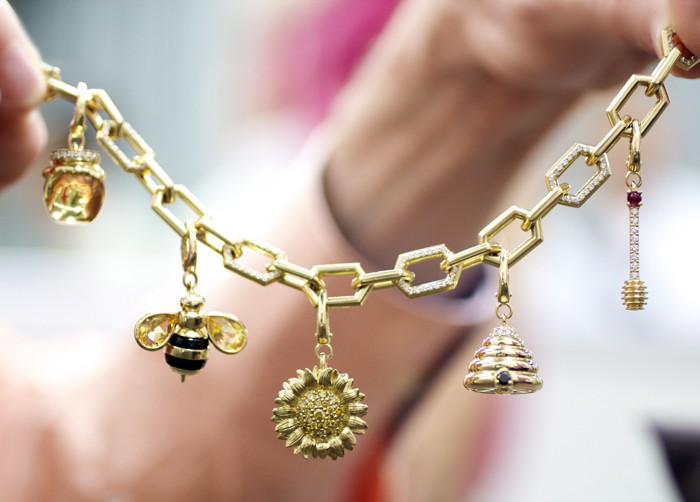
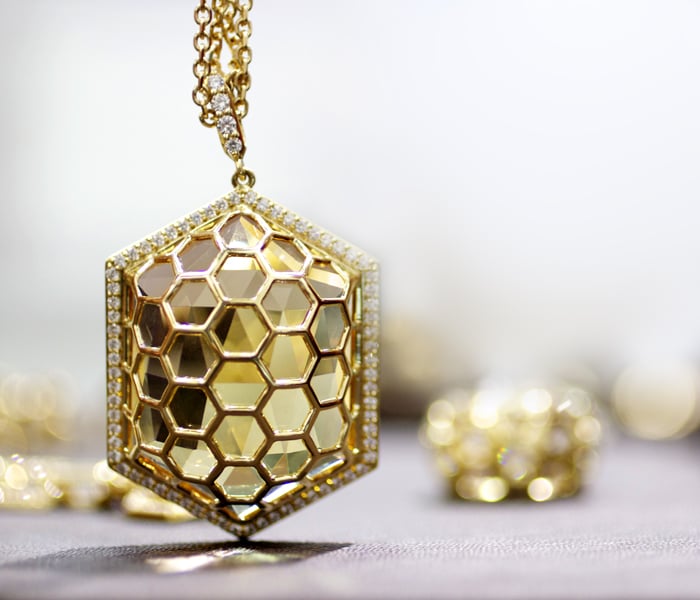
Gumuchian’s “B” Collection Donation to HoneyLove

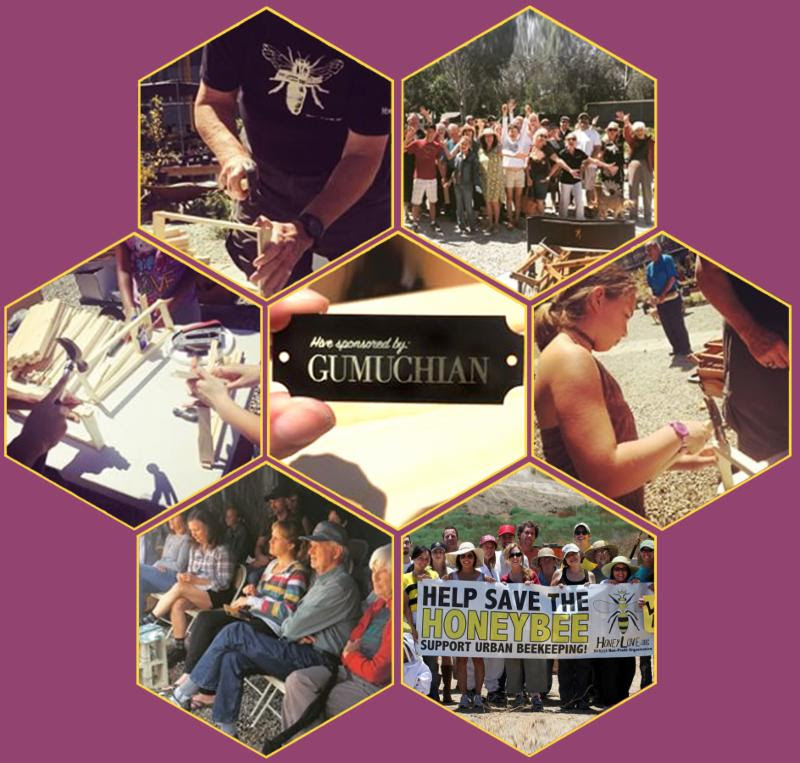
Saving the Bees: HoneyLove.org Hosts “Bee Symposium” with Donations Received through GUMUCHIAN‘s “B” Collection!

Local nonprofit, Honeylove.org, hosted an urban beekeeper symposium and workshop sponsored by GUMUCHIAN on Sunday, March 29th at the Grow Native nursery in Los Angeles, California. CEO of HoneyLove, Chelsea McFarland stated that the workshop taught attendees how to set up a “swarm box” on their property in order to help save the feral bee population. Says McFarland, “We taught people step-by-step how to set up a treatment-free, foundationless langstroth hive from scratch and how to make starter strips with beeswax. The workshop was open to the public (of all ages), had great attendance, and inspired a new group of beekeepers!”

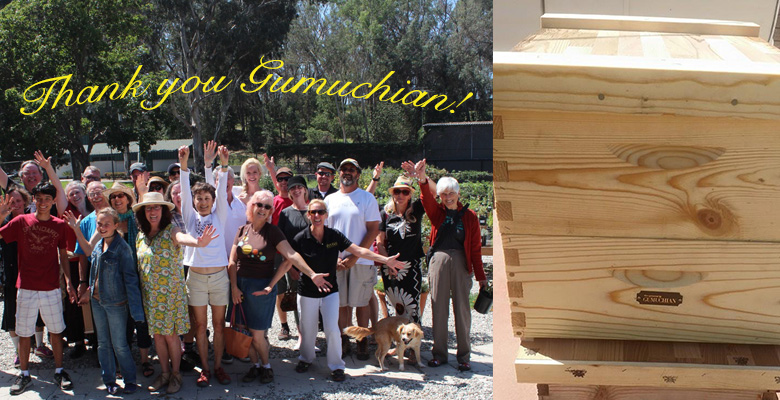
thankyougumuchian

The “B” collection will be available at salon 303 at the
COUTURE show in Las Vegas.


To make an appointment, contact Myriam@gumuchian.com or

Read full story · Posted in HoneyLove Buzz

READ: Brood diseases and lagging bees

by HoneyLover Susan Rudnicki

Spring is the time of year when bees go into high gear to get ready to do their instinctive reproductive act of procreation—swarming. A colony grows to fill its space, replacement queens are drawn and nurtured, and the final event is a leaving from the mother hive of about 50% of the workers and the old queen. These bees will attempt to found a new colony somewhere else and begin the cycle again. During this build up in Spring we urban beekeepers must watch carefully for the signs of swarm preparation and guide it so that a swarm is not the outcome—in the city such swarms are not appreciated by the general public living in close proximity to us.

I have now been keeping bees almost four years and am getting a better feel for the rhythm of the growth cycle in a colony. We have mild winters in Los Angeles, so the Spring brooding up period often begins in January. This means we will begin seeing drones and drone brood, new brood comb being drawn, and a general increase in the number of bees and activity of the queen.

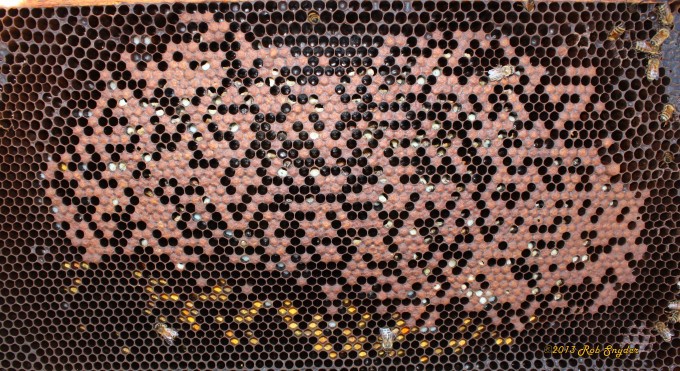
However, early this year, two of my hives at the house were not showing these changes and I really began to notice by February. It seemed they were just staying in a holding pattern—no new comb was being drawn and, at first, this was the most noticeable issue. By the beginning of March, I was seeing sac brood, perforated cappings (small holes in the brood caps), lots of uncapped pupae in the purple eye stage, dried up “mummies” of brood in cells, and some cells of open brood with watery goop that may have been European Foul Brood.  There were also some adult bees with DWV, or deformed wing virus. The wings of the bee are twisted little stumps or thread-like and useless. The colonies had plenty of stored honey and many frames of bee bread. Together, these conditions and the different maladies of the larvae and pupae are sometimes lumped under the name “Bee Parasitic Mite Syndrome”  which describes diseases vectored by the activities of the varroa mite.

Here is a website entry detailing what I was seeing—

Information compiled by Beekeeper Lonnie E. Campbell of The Loudoun Beekeepers Association.

Bee Parasitic Mite Syndrome was first named by The Beltsville Bee Lab to explain why colonies infested with both varroa mites and tracheal mites were not thriving. BPMS was first reported by European beekeepers whose colonies were already stressed by varroa mites. Colonies that are apparently very healthy and productive suddenly experience a sudden decrease in adult population often resulting in the total loss of the colony. Plenty of food stores are often present, but very spotty and unhealthy brood are observed.

I began searching my readings and books to find out what I might do to help these two formerly thriving hives (one hive is 5 mediums, the other 2 deeps and 3 mediums). I wanted to support them before their population dropped too much that they would be weakened beyond recovery. I saw on inspection March 22 that very little open brood was present and no eggs. One queen was seen (in the biggest colony) but in the other I didn’t find the queen.

Michael Bush’s book offered the best information for this situation that I could find. A brood break, or a cessation of egg laying by the queen, is one of the best responses for breaking the cycle of the pests and diseases that may afflict a hive. By denying the pathogens a food source the disease cycle is automatically broken. One way of doing this is to find and kill the queen and then introduce a new queen. Another way is to dispatch the queen and let them raise another one. By the time the new queen is laying, the brood break will have cleansed the disease cycle.

But the method I thought I would settle on was the use of a push in cage. This is a small confinement cage made out of eighth inch hardware cloth that holds the queen on the face of a frame for a period of time to prevent her laying eggs in the normal pattern. It is just a shallow 3 sided box of wire, 5 X 10 inches, pushed into the face of the wax comb. You try to place it in a zone with some honey cells, some emerging brood, and some open cells—all of these to serve the needs of the confined queen.

On March 28, after preparing two cages and getting my mind clear about what I was going to do, I opened up the first hive to start my search for the queen. I had at hand a  good tool for safely catching a queen— a “hair clip” catcher.

However, I soon saw that something better than my plan had already occurred. The frames that had lacked any eggs or open brood were now completely filled with eggs! The queens had stopped laying eggs by their own accord and interrupted the brood cycle of the diseases and varroa that had been afflicting them. I was very excited that the queens and their workers seemed to have a inborn strategy to get over their problems. My notes to Michael Bush to report this were confirmed in his answer here:

         Yes, the bees often do a brood break to resolve the issues.  Sometimes it’s done by dispatching the old queen and sometimes she just shuts down. EFB usually clears up on it’s own when whatever stress was the cause is relieved.  Usually by a flow in a dearth.

And this one:

It doesn’t always work out well, but then interfering doesn’t always work out well either.

“Our attentions may be useful to them but are oftener noxious to them; thus far goes our interference.” –Francis Huber (in a letter to Elisa)

“…without the foresight, or rather the astonishing presence of mind of the bees, who always do at the proper time what needs to be done…” –Francis Huber (in a letter to Elisa)

So, there we have it. Another beek lesson learned!

Read full story · Posted in Newsletter Articles

LISTEN: Natural Beekeeper Kirk Anderson via @rootsimple

Root Simple’s interview with Kirk Anderson, a natural, no-treatment beekeeper and mentor. Kirk tells funny stories and shares his wisdom on how to keep bees in a big city. During the podcast they discuss:

[click here to view podcast on Root Simple]

Read full story · Posted in HoneyLove Interviews

READ: Organic Beekeeping Conference in Oracle Arizona

Oracle_2015_2

By HoneyLover Susan Rudnicki

One of the most delightful and informative ways beeks can advance their understanding of bees and beekeeping is by attending conferences. The American Beekeeping Federation conference was held in Anaheim this year in January and I went to several presentations. This was a completely academic conference, combined with a large trade show—no live bees to work with. This group also reflects a strong conventional management and commercial pollinator representation. There are always things to be learned though, and I found the time well spent.

However, a number of smaller and more appropriate conferences for us treatment free folk also occur every year. The 8th Annual Organic Beekeeping conference at Oracle AZ, put on by Dee Lusby allows participants to visit the 9 bee yards kept by Dee in the remote Sonora desert near the Mexican border. These bees are never moved (no migratory pollination) are at least 4 deeps tall, are not re-queened or supported with any feeds, and are visited (on average) just 5 times a year. Dee’s honey is very dry and dark, reflecting the dry climate and mixed desert flora the bees have for forage. These flowers include many desert shrubs, cactus, wildflowers, and introduced weed species too numerous to mention. The Spring rains this year have been abundant and well spaced, so we saw lots of wildflower and cactus blooms. The desert smelled wonderful—fresh, sage-y scented with alternating bright blue skies and looming smokey thunderclouds.

Oracle_2015_1

Rob McFarland (Co-Founder of HoneyLove) and I drove to Oracle, which is in a very remote area. The conference is sited at the YMCA, with cabins and bunk beds for sleeping and 3 full cafeteria meals a day. Some of the best time is spent at meals in talking with other bee keepers from all over the US and even other parts of the world.

The conference lasts 3 days, with speakers on a range of subjects—apitherapy (using bee stings for health reasons), introduction of a new national on-line register for swarm calls to beekeepers, the beekeeping management calendar year from a extreme climate perspective, and new information on genetics and breeding of queens. Michael Bush and Sam Comfort, our great friends in treatment free beekeeping not only spoke individually, but on the last night gave us a melodious, heartfelt performance for almost a hour. Michael plays guitar and sings, Sam plays ukelele and banjo and a MEAN harmonica!! It was stupendous and had people’s roaring approval.

Our final day was devoted to driving on dirt roads to Dee’s remote beeyards—she has 700 hives. The day was a bit windy and cold, with threatening rain, but we went anyway, and the desert was glorious with color. The desert bees were very ferocious in defending their colonies, reflecting the weather and forage conditions they must deal with. We were fully suited and gloved to help restore some hives that were tipping wildly from the undermining of the bottom board by tunneling rodents. The hives had to be totally unstacked, the bottom board leveled and supported by fresh soil and the hives re-stacked—each at least 4 deeps.

I urge all that wish to really know beekeeping and infuse the relationship with new knowledge to attend these bee conferences.

Read full story · Posted in HoneyLove Workshops, Yay Bees

READ: Should LA legalize urban beekeeping?

by Dr. Noah Wilson-Rich

LA is the only major city in the United States with illegal beekeeping.

City planners must remain forward-thinking. California is a huge agricultural state. To make any pollinators illegal is to limit agriculture. That decreases job availability, limits food production, and prevents access to education. These are social justice issues, and policy makers must take action to allow access to these resource for all residents. In 100 years, is it possible that we could have modern, urban farms on rooftops or underutilized properties? It is, if policy allows it so. Our population is growing, but our available land is not. We must be smart about how we plan for the future of urban living. We must legalize pollination, and honey bees are the best generalist pollinator available to humans… Furthermore, corporate real estate companies are rolling out regional and national beekeeping programs to increase their sustainability image. Beehives can even help make skyscrapers more sustainable and earn an additional LEED certification point by the Council for Green Buildings.

Will legalizing beekeeping increase the number of swarms in the city?

Beekeepers play a vitally important role in preventing disease and preventing swarming. My 2014 TEDxBoston talk (above) showed how beekeepers work with municipalities to develop programs to collect any swarms rapidly, and perhaps more importantly, open access to education about how to prevent them. When New York legalized beekeeping in 2010, there was no influx of honey bees as pests to anyone. A person walking through Times Square today would have no idea that there are multiple hives overhead at the InterContinental Hotel. Managed beehives swarm far less frequently than feral hives because beekeepers add space to the hives as they grow. Space is a trigger of swarming, as the queen bee continues to lay eggs, the population of a beehive runs out of space, and some of that population must leave to go find a new home. Beekeepers prevent swarming by using standard, safe beekeeping practices to keep bees in their hives and not in people’s chimneys, sheds, or walls. This is a non-issue in Boston, New York, Paris, and anywhere else urban beekeeping has been successfully happening for a long time.

Will supporting urban beekeeping damage our native bee population?

Many native bees pollinate in different ways than honey bees do. For example, bumble bees use sonication, or buzz pollination, whereas honey bees do not. Carpenter bees drill holes in the sides of flowers and take resources through a different mechanism. Honey bees can collect pollen left by those other mechanisms and make use of it, but honey bees do not compete with those bees because of different pollination mechanisms. There is plenty of pollen and nectar to go around and be shared by all bees. See my book (The Bee: A Natural History, published in 2014 by Princeton University Press) for more information about urban beekeeping, including about how the diversity of bee species is relatively the same between ground level and rooftop habitats. Bees live in harmony – these are non-aggressive, vegan, garden pollinators. I, too, fully support native bee conservation, as well as pollinator conservation as the larger issue. My book addresses all 20,000 or so species of bees, to prove this.

Are bees still in trouble?

The 2014 Farm Bill provides reimbursement for Beekeepers who experience greater than 17.5% loss of beehives. The national average remains between 30-40% loss of beehives each year, and this is in the post-CCD world (see my Sept. 2014 piece in the New York Times). Bees are dying from myriad diseases for which there is no cure, and data published in the most recent Science magazine and highlighted in BBC show that there are host jumps to other bee species, specifically to bumble bees as Mark Brown and colleagues showed. Bees do best in urban environments, and so we must allow bees to live in habitats where they are thriving. This is of vital importance for our future in urban living, where we will have more and more people to feed from less and less land.

Policy makers need to vote in favor of urban beekeeping and not prevent access to jobs, affordable food, healthy food (fruits and vegetables), and education.


The Best Bees Company is now offering our beekeeping services in and around Los Angeles. Our proceeds fund our research to improve bee health. One of our current research studies is investigating urban beekeeping, comparing honey production and hive health in cities compared to the countryside. We are currently seeking special permissions to set up observational research hives in Los Angeles to provide local data, but our multiple emails to LA policy makers have remain unanswered. For more information about getting beehives, scheduling a complementary site consultation, bee research, speaking events, or hiring local beekeepers, please contact us at INFO@BESTBEES.COM or (617) 407-8979.

Dr. Noah Wilson-Rich is the Founder & Chief Scientific Officer of The Best Bees Company, a beekeeping service and research organization based in Boston’s South End. His research is based at the Urban Beekeeping Lab & Bee Sanctuary, where he and his team develops experimental treatments for improving the health of honey bees. In 2012, Dr. Wilson-Rich gave a Ted talk about urban beekeeping. His first book. “The Bee: A Natural History” will be published in 2014 by Princeton University Press (US) and Ivy Press Ltd. (UK).

Read full story · Posted in HoneyLove Interviews, Newsletter Articles, Yay Bees

NEW! LA County Apiary Registration Forms

LINK TO FORMS: https://www.dropbox.com/sh/5tr9ljcy5zsapkw/AAAHSuE3fqpAlDAgLFF7Lzgwa?dl=0 Paul Hekimian inspects a honeycomb forming in one of the hives behind his home

Read full story · Posted in Uncategorized

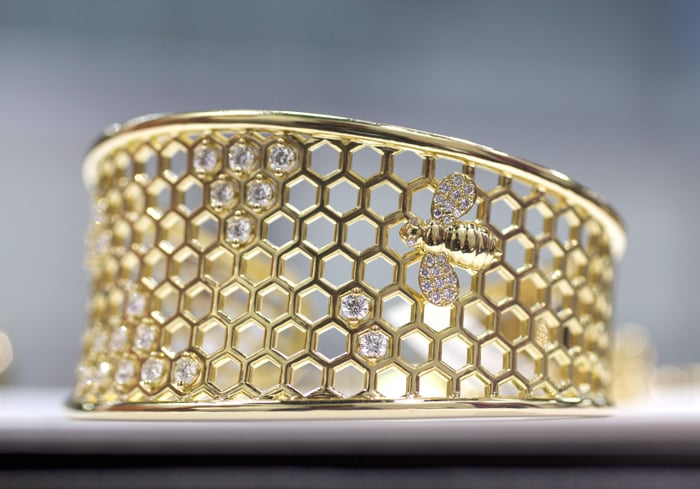
Gumuchian “B” Collection—Buzz

Check out all the buzz about Gumuchian “B” Collection!!
A portion of the proceeds of all sales will go to HoneyLove.org!


Photography courtesy of Erika Winters from Pricescope

PRESS:

http://obsessedbyjewelry.com/celebrate-national-honey-bee-day-gumuchian-jewelry-cause/

http://www.cijintl.com/In_The_Press-6076.html

http://jewelrynewsnetwork.blogspot.com/2014/05/gumuchians-jewelry-is-for-bees.html

http://instoremag.com/homepage/shine-news/13854-new-gumuchian-collection-highlights-bees

http://jogsshow.com/gem-jewelry-news/honor-black-yellow-friends/

http://www.jckonline.com/blogs/style-360/2014/05/16/debuting-in-las-vegas-gumuchians-b-collection-bee-theme-gold-jewelry?utm_source=JCK%20eNewsletters&utm_campaign=61b72045d4-2014_05_16_Fashion_Friday&utm_medium=email&utm_term=0_56301e74d4-61b72045d4-333952953

http://americangemsocietyblog.org/2014/06/14/jewelry-with-a-cause-gumuchian-creates-awareness-for-honeylove/

http://blog.sina.com.cn/s/blog_988dcd240101irgg.html

http://adornmentality.com/2014/05/28/jewelry-week-in-sin-city-who-you-should-see-part-3-jck/

http://www.pricescope.com/blog/whats-buzz-gumuchians-new-b-collection-stunned-jck-2014

http://blog.nationaljeweler.com/2014/05/the-baubles-and-the-bees.html

http://www.jckonline.com/2014/07/15/gold-bee-inspired-jewels-and-silicone-supported-bangles

http://news.centurionjewelry.com/articles/view/brand-news-from-gumuchian-frederic-sage-forevermark-and-precision-set

http://www.epageflip.net/i/359465   Page 28

http://www.jckonline.com/blogs/on-your-market/2014/08/05/britts-pick-gumuchians-b-honeycomb-medallion-pendant

http://www.jewelsdujour.com/2014/05/the-bees-knees-gumuchian-b-collection/

http://obsessedbyjewelry.com/celebrate-national-honey-bee-day-gumuchian-jewelry-cause/

Read full story · Posted in HoneyLove Buzz